Category Archives: On Writing

So, You Want to Write?

   Recently, I had a discussion with an acquaintance who was curious about my writing methods. Among other questions he asked were these:

  • How long did it take for me to write my two published books?
  • Did I have a thorough outline of my books or the separate stories in them before I started writing?
  • Did I write every day?

   These are common ,if naïve, questions of the sort writers get all the time. In my case, the answers were, respectively: years, no, and no.

   During the course of our chat, he volunteered that he’d really like to write a book but probably never would because he isn’t a very skillful writer and because he has a lot of imaginative ideas that mostly come to him in dreams which he cannot clearly remember shortly after he wakes up. (I recommend keeping a pad and pencil at the bedside.)

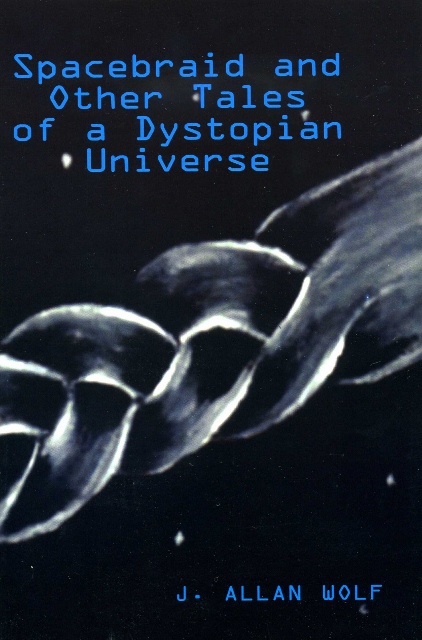
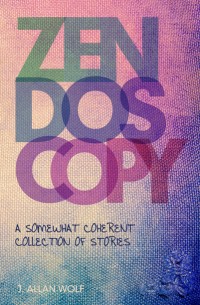
   I’m a self-published author with low volume sales, so I suppose I could be criticized for daring to give personal advice to an aspiring writer, but the fact has never stopped me in the past, and so I did provide some counsel. First, I told him that the length of time it takes to write a book is variable. In my own case, it was several years for each of the two books (Zendoscopy and Spacebraid and Other Tales of a Dystopian Universe) partly because I was working as a physician and only writing in my spare time, and partly because the books contain separate, discrete stories or episodes written at different times and then anthologized. In the case of Zendoscopy, the connected episodes were initially written to be freestanding short stories but then re-written as my concept for the book later developed.

   Some writers cover walls with detailed plot outlines indicating linkages between the elements of their stories and providing continuity and overall coherence. I tend to be another kind of writer. I rarely know where any given tale will lead when I write its first sentence. Once begun, however, I watch it evolve as I write it. And although I may have some vague idea of where I’m going, it’s rarely fixed and immutable. Of course, there are exceptions.

   Two examples from Zendoscopy illustrate these usual and occasional modes: In “Icarus Alt and the Swan Dive of Death”, I did, in fact, know precisely how the story would evolve before I wrote a single word of it but, more typically for me, in “Effie Mae Does Me a Second Favor”, I didn’t have the barest clue of what it was really about until I typed the last period.

   In other words, occasionally I know where a story is headed, but mostly I don’t. Suffice it to say that there aren’t any rules, and when I don’t know where I’m going, I just keep writing and allow myself to be surprised.

   As for the question about writing every day, I pretty much do write something on a daily basis. Sometimes it’s just a single sentence with an idea. Sometimes it’s a letter to the editor of a magazine or newspaper. Sometimes it’s part of a short story or an essay. And sometimes it’s an article for this blog. For the record, e-mail doesn’t count unless I’m being really creative.

   The more one writes, the better one becomes at doing it, so even if one only writes a single sentence every day, it’s worth doing to develop both discipline and syntactical skill. I’d also urge anyone (you!) who wants to write to read as much as possible. There’s nothing quite like seeing how other writers use language to help you in developing your own personal style and voice. And when you’re banging out text on your word processor, be sure to use spell check and be comfortable enough with English grammar so that when you break the rules, you do it intentionally. If you really need help with grammar, you can use the grammar checking utility in your word processing program, although I’ve found that it isn’t always correct in its suggestions for change. Much like the GPS system in my car, which if followed too slavishly, can lead me right into a large body of cold water.

   Finally, and most of all, if you want to write, start writing! From experience, I can tell you that it’s addictive. Once you start, you may not be able to stop.

Today’s annoyance: People who don’t know the difference between insure and ensure.
On Writing What You Know

Traditional advice to new writers is to “write what you know”. This is sometimes much easier said than done. For instance, if you’re set on writing the Great American Novel, and if that novel is going to be about living with polar bears in barren arctic wastes, knowing nothing about polar bears or the arctic may prove somewhat of a hindrance.

In my own case, there are several things I know a lot about: medicine (I’m a retired physician), amateur radio (I’m a long time “ham” radio operator), radio controlled model airplanes, computers, playing the guitar… In other words, I know a lot about stuff that, perhaps other than medicine, doesn’t lend itself very well to writing the GAN. And medicine has, in a manner of speaking, been done to death in novels. Everything from Love Story to The Andromeda Strain. It’s hard to be original these days.

So, what’s the writer to do? Should the polar bear be a guitar player in a rock band? Probably not, but working what you know into your plot in some basic way can often be useful.

In my book, Zendoscopy, I tell the story of Sherman, a square peg sort of kid whose character is somewhat elaborated upon by showing his involvement in ham radio, something I know about. I also used ham radio in my story, Spacebraid, the anchor story in Spacebraid and Other Tales of a Dystopian Universe. Neither story is about ham radio, but using it as a device to illustrate character or upon which to hang a plot turn was very useful.

Overall, as a generalist by nature (some would say dilettante), I know a little about a lot more than a lot about a little, except in a few areas. Those few areas in which I do have pretty deep knowledge mostly (except for medicine) don’t lend themselves to anchoring a whole novel, but as a generalist, I find strength in writing about broader issues. Thus, the coming of age story in Zendoscopy, or the ecologic catastrophe in Spacebraid. In other words, I took my general world view and knowledge, hung the plot on it, and then spiced it up with the smaller specifics about which I know a lot and which would likely ring true to the reader.

Having said this, I would add that there’s nothing wrong with writing about just what you know, as long as you are targeting it for a similarly oriented audience. So, I’ve written about radio controlled aircraft for a modeling magazine targeted to people who fly radio controlled airplanes. And I’ve written about ham radio for publications aimed at amateur radio operators. But those pieces were not novels.

So, what’s the bottom line? It’s that if you’re writing a novel, after settling on your overall plot, there’s every reason to sprinkle it with what you know to add color and depth to your characterizations or unexpected twists in the story line. Of course, unless you’re writing fantasy, keep it believable. You may not get far if your gritty detective story has a scene with a polar bear playing “Light My Fire” on a ukulele in Maui.

Plot 10, Writing 3

With apologies to A Chorus Line, “Plot 10, Writing 3”…

Thanks to an initial subscription given to me by my daughter and son-in-law, I have for several years been receiving a monthly publication featuring science fiction short stories and novellas. As one might predict, the quality of the stories varies, with some being very creative and engrossing, and some being significantly less so. What is disturbingly pervasive across the magazine’s creative spectrum, however, is some terrible writing and editing. To wit: the editor of the aforementioned sci-fi magazine, in responding to a letter from a reader complaining that he hated two recently published stories, wrote, “I actually feel like only hating two stories out of the year is pretty complementary, all things considered.” Clearly, the magazine’s editor needs some remedial work. (If you don’t see the error, you do, too.)

This particular magazine is not alone in the bad execution department. It exists in many self-published books as well as newspapers and magazines, and don’t get me started on club and other organization newsletters. I’ve written briefly about this before, but recently have seen so many good plots and articles marred by stupid writing errors that I’m motivated to address the problem in more detail, now.

Some of the problem, of course, can be attributed simply to lousy writing skills. There are a lot of folks who simply find it beyond their skill set to write a simple declarative sentence without error(s). The problem is exacerbated when they try to be creative. Disagreement between subjects and verbs; dangling constructions; tense discordance; the list goes on. What were these people doing back in grammar school? Obviously, not learning English. (Where’s grammar? Upstairs, sleeping.)

Most writing for publication these days is done on computers. You’d think people would use spell check before submitting a piece. But you’d be wrong. Why don’t they? Who knows? Grammar check? Ditto.

When pieces are submitted, they are often sent as e-mail attachments. This has led to carelessness in the editing process. Publications are no longer typeset and may receive no more than a cursory review by a nominal editor before being transferred directly from the submitted file to the actual document for publication. In other words, the role of the editor has become markedly diminished and apparently, in some cases, nonexistent. This is how idiotic errors on the order of, “John slipped behind the wheel and they put the key in the ignition,” can and do occur. With poor or no editing, we see things like there/they’re/their errors, the frequent “could care less” instead of “couldn’t care less” mistake, or the abominable her’s instead of hers. Read critically and you’ll find all sorts of execrable stuff like this.

So, what’s the answer? Unfortunately, I’m not sure there is one.

We don’t teach English usage well in our schools. Multiple choice testing and the lack of assignments requiring writing are major contributors to the problem. Worse, many teachers, being recent products of our faltering educational system with its lack of emphasis upon the acquisition of English skills, are simply not equipped to teach current students. The prevalence of texting is another problem that has received much attention. To say it’s ungrammatical would be an understatement.

Does any of this matter? Perhaps not for idiomatic, everyday communication. But I think it does matter for more formal journalistic, nonfiction, and creative writing. Maybe I’m being overly sensitive, but nothing ruins my mood while reading a terrific article or story quite as much as coming across an “irregardless”, a misuse of “begging the question”, a dangling phrase, a homonym error, a misplaced or misused apostrophe, or any of a large number of other errors that should never occur.

Call me a curmudgeon, but I think there’s beauty in our language, and I hate to see it butchered.

Little Pieces

Up to now, I’ve pretty much dealt with both writing, publishing, and marketing one’s books. What I haven’t addressed is the subject of articles and essays, and the task of getting them into print. My own experience has been spotty, with some high points over the years mixed in with lots of rejections. Maybe my own history will prove useful if you’re trying to get some shorter pieces into print.

Back in the 1980’s, when I first started submitting articles to publications, I had some pretty grandiose notions about where I could be showcased. This resulted in a series of rejection letters from some of our finest publications of the day: New York Magazine, The New Yorker, Omni, Playboy, California…all on their lovely stationery. Usually these form missives began with “Dear Author” and went on there to note that either my material wasn’t “quite” right for their august pages or, occasionally, the dubious and likely faux politesse of, “We get many submissions and, unfortunately, cannot publish them all…”

I used to save all these letters, feeling I might someday paper my bathroom wall with them. Recently, however, I gave up on the idea and threw them out.

After receiving a certain number of these rejections, I began to see things in more realistic terms and, looking to a couple of my hobbies – amateur (“ham”) radio and model airplanes – wrote several articles for hobby-niche publications which, in fact got printed. I also wrote for a medical “throw-away” publication called Medical Economics, got a number of letters to the editor into a local newspaper and the L.A. Times. My latest success is that I will have an essay published this summer in a medically-oriented literary journal, The Pharos. Over the years, I’ve accumulated a fair number of these sorts of published pieces – enough to keep me encouraged in my writing while working on my two books.

So, what are the lessons to be taken from this? I think they’re few in number but highly valuable.

First, unless you’re a well known writer or have some high level contacts, you will likely end up on the slush pile of major magazine editors if you’re submitting to them cold. I’m not saying you shouldn’t do it, but you need to be realistic. I’ve still never gotten a story into Playboy, even though I’m egotistical enough to think that the few pieces I’ve sent to them over the years are at least as good as some of the fiction they’ve printed over the same period of time. Send targeted pieces to smaller, niche publications, many of which will likely be happy to publish your work.

Second, and there’s nothing original about this suggestion, write what you know even if it’s not really what you want to do. There’s nothing wrong with writing an article about servicing left handed veeblefetzers if that’s what’ll get you into print in the American Journal of Applied Fetzerology. You won’t make much money at it but you’ll be a published writer, and that’s at least part of your goal fulfilled.

Third, write letters to the editor of newspapers and magazines. You might or might not get printed but, if you do, people will see your name, and that’s important.

Fourth, no matter what you submit and where you submit it, expect a fair share of rejections. It’s going to happen, and if it’s going to upset you, you should probably be doing something else.

Fifth, no matter what, continue writing. The worst thing is to stop. The more you write, the better at it you are likely to become. And don’t be afraid of feedback and criticism. It will sharpen your focus, increase your insight into what you’re doing, and tell you much about the perceptions of your audience. If you’re going to succeed, you have to keep at it and develop a thick skin.

Wanda’s Readers

Wanda’s Readers is a book club in Riverside, California. A close friend belongs to the club and, having read and liked Zendoscopy, she decided to recommend it as the book of choice for the club’s June project. Then, she contacted me to ask whether I’d be willing to attend their June meeting for a “meet and greet” with the author.

Zendoscopy is, as has been noted in its Kirkus review, a “memoirlike” (sic) novel consisting of a series of loosely linked episodes in the life of a young boy and his coming of age as a young man. The book’s primary target audience is male, and although I accepted my friend’s invitation to attend the meeting, it was with some apprehension, Wanda’s Readers being a women’s book club.

On the appointed day, with my wife accompanying me, I presented at the knitting store where the group meets. There were about a dozen women in attendance, along with my friend’s fiancé (and longtime friend of ours). He was the only other male in the room.

The evening began with a nice dinner, during which conversation was casual and friendly. Eventually, however, it came time to discuss my book. I was invited to make a few opening remarks, and I described in some detail my concept for the book, trying to place its themes at a level above the specifics of the plot. This turned out, I think, to be a useful way of approaching the discussion, since it opened up the book to a discussion going beyond viewing the book as simply a collection of perhaps entertaining stories and, instead, provided an overarching view of what I, as the author, was trying to accomplish.

In response to my opening remarks, I got back some predictable questions: How much of the book relates real events? Am I Sherman, the book’s narrator? How long did it take me to write the book? And so on. But what also came out was something much more interesting, namely, the feeling by some of the readers that the book gave them a glimpse into the male psyche not often offered or shared with them. Several of the readers implied that they’d not before been exposed to such frank expression of male concerns, anxieties, desires, and, dare one say it, feelings. It occurred to me that, in fact, Zendoscopy was to them in some ways a male version of “chick lit”, a book dealing with male motivations, emotions, and trials. If, for these women, it was a sort of revelation, it was for me totally unexpected and even enlightening, something I never would have guessed.

Two of the women told me that their husbands had read the book. One of these men apparently made little comment after reading it, but the other identified closely with the stories and themes, reacting as I would hope a primary targeted reader would.

In the end, it appears that both the readers and I learned something from the evening. From my perspective, it was a wonderful experience. I received insightful feedback – not all positive, I would add – from a group of thoughtful, intelligent readers who expressed their reactions articulately, constructively, and with humor and respect.

As a self-published writer, I know first hand how difficult it can be to secure honest feedback from independent sources. Opening myself to such input at the book club was therefore a valuable experience, and the perspective I gained will, I hope, make me aware as I undertake future writing projects of the ways in which my work may be perceived by other than those who I might assume to be my primary audience. So, my thanks to Wanda’s Readers, and my strong recommendation that if you’re a self-published writer, you should seek out and actively engage with any group that might wish to do a “meet and greet” with you. Oh, and bring a few copies of your book and a good pen with you when you go. I did, and I sold and signed a few books, especially for those who had bought the Kindle edition of Zendoscopy.

Flash News and Thoughts on Independent Bookstores

FLASH!!! Zendoscopy selected as one of 20 indie books to have its review published in the 1 June 2014 issue of Kirkus Reviews!!

And now, this week’s entry:  The Independent Bookstore: An Endangered Species

Books have been a critical part of my life almost from earliest memory. From the Golden Books read to me as a young child by my mother all the way to Christopher Hitchens, I have found delight and stimulation through reading.

I began my independent searching out of reading material while still in elementary school, when once every two weeks the L.A. Public Library’s “Bookmobile” would park on the school’s playground and open its door those of us hungry for words on a page. From Heinlein’s “The Red Planet” to Brooks’ “Freddy the Pig” stories, I devoured the Bookmobile’s offerings.

One day, my mother took me to a new treasure trove of literature. A claustrophobic cluster of little rooms packed with books called Lewis’ Book Store and owned, of course, by Mr. Lewis. I never knew his first name, but I remember him to this day. He was just what you’d expect of such a store’s owner: an older gentleman, short of physical stature, kind and willing to help a young boy find just the right book to take home for his collection. And take home books I did: The Hardy Boys, Tom Swift Jr., Rick Brant, the Winston Science Fiction Series, the Triple Title Series (Space, Space, Space; Ghosts, Ghosts, Ghosts…), Max Shulman’s Guided Tour of Campus Humor, and on and on and on.

I remember those days of poring over Mr. Lewis’ shelves and going home with new treasures with aching nostalgia. I had feelings then that simply aren’t duplicated when I conjure up Amazon.com on my PC or walk into the local Barnes and Noble.

But there are places where the feeling comes back.

There are still wonderful independent bookstores ripe for exploration: City Lights in San Francisco, Book Soup in West Hollywood, and others, but they are an endangered species. It’s so easy to download the latest e-book from Amazon Kindle or Barnes and Noble Nook, or to order hard copy from myriad online sellers. I know – I do it, too. But I feel sad and even a bit guilty about it, because we’ll have no one to blame but ourselves if we allow independent bookstores to become extinct.

Why do I raise this issue now? Because a local two store operation, Mysterious Galaxy, is closing its store in Redondo Beach. For those who follow my blog, the name will be familiar. Mysterious Galaxy is the store that hosted twenty authors at a recent “meet and greet”, giving us (yes, I was one of the twenty) the opportunity to court potential readers and sign copies of our books for those readers interested enough to buy. For those of us committed to the welfare of the independent bookstore, this closure is a major blow, and a sign that places with knowledgeable, helpful staff and offering real, material books that one can pick up, examine, and take home just as I used to do when I went to visit Mr. Lewis, could easily become a thing of the past.

Online booksellers and cavernous Barnes and Noble four-walled stores aren’t going to go away, but we must not let them completely bury wonderful independent and even some limited chain stores, like the dying Mysterious Galaxy or the fortunately still apparently healthy Vroman’s/Book Soup. Mr. Lewis would not approve their demise, and neither should the rest of us.

Reminder: Zendoscopy is available from the following booksellers: Book Soup (8818 Sunset Blvd., West Hollywood – a great independent bookstore) and the UCLA BookZone (Ackerman Student Union, UCLA campus). Please support them. Of course, it’s always available from the usual online booksellers and Kindle, but wouldn’t you like to browse in a real bookstore? And any independent bookstore that doesn’t have my books, Zendoscopy and Spacebraid and Other Tales of a Dystopian Universe, on its shelves can order them for you.

Zendoscopy Featured at Book Soup!

For those in the L.A. area, my collection of funny, sad, and outrageous stories, Zendoscopy, is now a featured “local authors” selection at Book Soup in West Hollywood, at 8818 Sunset Blvd. Here’s a link to the store and my book:

http://www.booksoup.com/Local-Authors

If you’re in West L.A., you can also find it in the UCLA BookZone in the Ackerman Student Union on campus.

And, of course, it’s available from many online booksellers, including Amazon.com, Amazon Kindle, Barnes and Noble, and others.

Kirkus Review of Zendoscopy

Here is the just published Kirkus Review of Zendoscopy:

In this memoirlike novel, a self-described nerd fond of ham radio and the accordion comes of age in the 1950s and ’60s.

This second book by Wolf (Spacebraid and Other Tales of a Dystopian Universe, 2004) is not exactly a memoir. These loosely connected anecdotes follow Wolf’s narrator, Sherman Alt, through childhood and adolescence in Southern California before he attends medical school in New York City. Readers will easily identify with the trials and tribulations recounted here, from bullies and hideous acne to ballroom dance lessons, a momentous game of Spin the Bottle and fraternity hijinks. Most notably, readers witness Sherman’s protracted quest to lose his virginity; when he finally achieves his goal, he gets more than he bargained for. While the themes presented here may seem ordinary, the details are vivid and memorable, with amusing descriptions of his romantic, social and medical misadventures. After a long night of white wine and cheese fondue during his travels abroad in Europe, Sherman notes that he proceeded to “barf until my testicles were left dangling from my nostrils.” However, this book isn’t all fun and games, as a more pensive undercurrent runs through the collection. Sherman experiences the early loss of a childhood companion, a strained relationship with his father and the feeling of alienation caused by his avowed atheism, components that are nicely tied together in the final chapter. The prologue and the epilogue, full of tongue-in-cheek wordplay and parenthetical asides and written explicitly in Wolf’s voice, represent perhaps the least effective portions of the text. Wolf maybe felt the need to contextualize his tales by invoking the big picture and pondering theories of the universe’s origin; readers might appreciate the effort and the content but not necessarily the result or style.

A respectable batch of entertaining anecdotes, mostly bawdy and occasionally moving, mixed with moments of human connection and philosophical musing.

Success at California Bookstore Day

This past Saturday, 3 May, was California Bookstore Day, an event celebrating what is an at risk institution: the independent bookstore. A bookstore in my area, Mysterious Galaxy, held a local authors’ “Meet and Greet” in recognition of the day, and about 20 authors, of whom I was one, were given space to show, sell, and sign their books for several hours. It was a great event and lots of fun both for the authors and the many readers who showed up to browse, chat, and (yes!) buy.

Especially interesting for the authors was the ability to network a bit among themselves, something we don’t often get to do in such an informal environment. There was lots of discussion of issues surrounding getting published, marketing, and the craft of writing. All in all, it was a great experience. And I did sell a few of each of my books.

I’ve previously written in this blog about the frustrations of finding a publisher, and there was much interest among the authors in our varied experiences with our publishers. Some folks seemed less than delighted, much as was I, with the publisher of my first book. Some appeared to be quite satisfied with the support they had received, but all of us, as independent, self-published writers, shared the frustration of not being able to break through into the big time, getting published by one of the major houses.

Of the several goals of this blog, one of the most important has been to chronicle my own, ongoing saga as a self-published author. As I move on from my positive experience at Mysterious Galaxy (my thanks to the staff there and, especially, to LeAnna!), I’ll keep reporting. I’m encouraged by the early reaction of readers to Zendoscopy but, as I’ve said before, the big problem for self-published authors is getting the word out. Word of mouth can be effective if the reader base spreading the word is large enough, but it generally isn’t for self-published writers. And marketing is expensive. We do what we can and hope for the best. In the meantime, we keep on writing, because the only thing worse would be not writing. So, if you’re an aspiring or fellow self-published author, keep watching the blog. And if you’re in tune with the other topics that also surface here, please hang in, as there’s more to come.

Today’s annoyance: The two browsers at the bookstore on Saturday who talked and talked and talked my ears off…and didn’t buy either of my books. (Fortunately, this was counterbalanced by one fellow who chatted with me for two minutes at most and then bought both books. Thanks, man. You made my day!)

California Bookstore Day

This Saturday, from 3 to 5 PM, in celebration of the first annual California Bookstore Day, I’ll be participating in a Local Authors’ Meet and Greet at the Mysterious Galaxy bookstore, located at 2810 Artesia Blvd. in Redondo Beach. There will be over 20 authors present, selling and signing books. I’ll have copies of both Zendoscopy and Spacebraid and Other Tales of a Dystopian Universe for sale so, if you’re anywhere near Mysterious Galaxy (2 blocks west of Hawthorne Blvd. on Artesia Blvd., near the South Bay Galleria, please stop in, at least to say hello. Should be a lot of fun.

Here’s a link with more information about the event and the bookstore:

http://www.mystgalaxy.com/Event/Local-Author-Meet-and-Greet-RB-050314

I hope to see you there.

cover_fronte-book front cover reduced (422x640)