Author Archives: J. Allan Wolf

Unknown's avatar

About J. Allan Wolf

J. Allan Wolf is a writer, a physician (OK, retired), a nerdy ham radio operator, and a bad guitarist. (The groupie thing just hasn't worked out very well.) Read his two books, Spacebraid and Other Tales of a Dystopian Universe (very science fiction-y) and Zendoscopy (very, very funny but also serious in places and explicit -- don't read it if you're a prude). If you buy my books (print or e-book format at Amazon.com, BarnesandNoble.com and elsewhere) I won't have to go without lunches or clean underwear. So, thanks in advance.

BOOK REVIEW: Going Clear, by Lawrence Wright (Knopf, 2013)

Over the years, I’ve read many horror stories, some fictional and some not. In truth, the most terrifying of these have been those that were not fictional. For example, several years ago I read Into Thin Air by Jon Krakauer, one of the most horrifying stories I’ve ever encountered. Going Clear, by Lawrence Wright, is another frightening tale that is made all the worse because it is a continuing story, one of cultism, manipulation, coercion, deception, and the willingness of people to believe uncritically in, and to commit their lives to, a religion so preposterous that it would be laughable if the reality of its penetration into society were not so shocking. Going Clear is the story of Scientology, as reported by a reputable and scrupulous journalist.

At the outset, I should state my bias. Those who read my blog on a regular basis know that I’m an atheist and humanist. While I love reading science fiction and fantasy stories and have even written a published collection of such stories, I know that such tales do not represent reality. Unfortunately, the same cannot be said for the poor souls who accept the bizarre fundamentals of Scientology, large among them being the existence of the galactic overlord Xenu and of individuals’ bodies being inhabited by multiple “thetans” that must be expelled in order to “go clear”.

Society tends to view all new religions as cults, and where the label of cult ends and that of true religion begins is a somewhat arbitrary matter. Arguably, all religion, no matter how mature, is really cultism and characterized generally by belief in some element of the supernatural, acceptance of a defined body of orthodox thought, group identity, and intolerance of apostasy. What, really, is the difference between believing in the Christian resurrection of Jesus and Joseph Smith founding the Church of Latter Day Saints based upon his use of “seer stones” to read golden plates to which he was directed by the angel Moroni? Between the virgin birth and Heaven’s Gate believers’ faith in extraterrestrials in a spaceship trailing behind comet Hale-Bopp? I could go on, but you get the idea: religion requires some element of belief in the supernatural or objectively unfounded and generally is not subject to arguments of science or reason.

Wright’s book explores the origins of Scientology, beginning with the extraordinary life of L. Ron Hubbard, the man who started it all with his book, Dianetics. The tale goes into his early life, admittedly remarkable and characterized by a number of worldly adventures, each of which ended largely in failure, his becoming a science fiction writer, and then elaborating the germinal ideas that led to dianetics, which eventually became the religion of Scientology.

Hubbard became progressively unhinged over a period of years, paranoid, irrational, and fanatical. In the end, he was quite out of control and isolated by the church he founded, which was taken over by a second, less bright but arguably more organized, autocratic, and allegedly brutal individual, David Miscavige.

Wright details a number of church endeavors, prime among them being its battle with the IRS tor tax exempt status in which it beat the agency into submission with endless legal challenges, forcing a settlement that taxpayers now have to live with. On the PR front, he details how the church has aggressively courted the entertainment industry, notably latching onto and cynically manipulating John Travolta and Tom Cruise into being the church’s most prominent exponents. He sheds light on the circumstances surrounding the death of Travolta’s son, and describes in detail how the church actively sought out and groomed a female consort for Cruise. The litany of stories involving harassment, confinement and physical abuse of church members for various and often trivial transgressions, and the aggressive activities of the church in trying to retain certain of its defectors, paints a picture of an organization with little respect for human rights or dignity even more troubling than its crazy core beliefs.

One may well ask after reading Wright’s account whether it can all be true. The church denies much of it, but Wright’s documentation appears sound, with extensive citing of existing materials and interviews with many witnesses and church defectors. In the end, it is left to the reader to decide whether to believe it all, but if even some of what is recounted is true, questions must be asked, including how people can be so pathetically ignorant and vulnerable as to be sucked into such an organization, and how the church hierarchy can get away with what it apparently does.

Again, it should be stressed that much of what Wright has documented is denied by the church, but the weight of the evidence is not in its favor. As an atheist and humanist, I recoil at religious cultism, and so whether Wright’s account is valid in all of its respects is less an issue for me than that it is a cautionary tale about religion and what it can do to people in general. Even if none of the abuses and cynical manipulations alleged (and well supported) in the book actually took place, the central beliefs of the church are preposterous enough to warrant our total amazement that anyone could take them seriously.

This is a truly terrifying story, but one that should be widely read and seen as a cautionary tale about the irrationality and, in the case of Scientology, the dangers of uncritical religious faith and commitment.

Highly Recommended

Book Review: Spelled, by Kate St. Clair

Back in prehistoric times, when I was a kid, my parents wanted me to become an enthusiastic reader. Toward that end, they took the position that it didn’t really matter what I read, as long as I was reading. This led to my accumulating a large collection of comic books and checking out every science fiction novel I could find from the L.A. public library’s “bookmobile” that regularly visited my elementary school. (I can still remember the first sci-fi book I ever read: The Red Planet, by Robert A. Heinlein.) My parents’ approach worked, and I became an avid reader.

With this in mind, and after meeting writer Kate St. Clair at a local authors’ “meet and greet” at a nearby bookstore on California Bookstore Day (where I was also one of the participating authors), I decided to check out her young adult targeted novella, Spelled, published by Black Hill Press this past February.

In the course of her short book, St. Clair tells the story of the Sayers family through the voice of Georgia Sayers, the eldest of five siblings. We quickly learn that the children live with their stepfather, their mother being deceased and their biological father being someone whose critical role will become evident later in the story. As the tale progresses, we learn that Georgia and her sibs have an unusual and supernatural heritage that sets them apart from all but one other fellow student, a boy older than Georgia but one whom she begins to tutor in English. As Georgia, her three sisters, and her brother come to grips with their previously unknown family legacy, they face unexpected stresses and risks, and ultimately learn much about themselves that will finally bring them closer together than they have ever been in the past.

The book seems aimed at an audience of adolescent girls in roughly the 12 to 16 age range, and one can easily imagine it as the start of a series of stories about the family. It also contains precisely the kind of youth-oriented setup that could provide the seed for a series on “The CW”. By the time I had finished reading the book, it had occurred to me that it would be an excellent “stocking stuffer” for parents wanting to encourage their kids as readers.

In Spelled, Ms. St. Clair has nicely captured adolescent behavior, including especially some of Georgia’s uncertainties and angst over how to deal with life’s challenges and relate interpersonally with those around her. She tells a story that involves the supernatural while grounding it in real world decision making and the stresses that come with it.

My only criticism of the book is that I came across a few proofing glitches, but these were relatively minor and did not detract from the overall reading experience. In an age when books are no longer traditionally typeset but, rather, are uploaded from word processed files, proofreading can suffer. In this regard, Spelled isn’t unique, but the potential for inadvertent retention of typographic errors mandates special care before approving final galleys.

Recommended for the younger end of the YA audience

Boko Haram and Us: We Have Met the Enemy

(Note: Due to a personal schedule commitment, this week’s blog entry is being made earlier than usual.)

By training I am a physician, although now retired. A board certified obstetrician and gynecologist, to be specific. Partly because of this but mostly because, simply, I am a human being, I cannot but express revulsion and horror over the ignorant, immoral, politically and religiously motivated kidnapping of those 300+ girls in Nigeria by the radical Islamic insurgency, Boko Haram. This group, which seeks to replace the sitting Nigerian government and institute strict sharia law, is opposed to anything it deems “western”, such as secular education, including the education of females, and any other elements it determines may be a part of “western culture”. The group is a living anachronism, a throwback to ignorant barbarism so far removed in time as to be almost incomprehensible in the 21st century. Or is it?

In recent years, Islamic fundamentalism has been the cause of much worldly mayhem, but it would be wrong to view it in historic isolation. Religion has been associated with, and frequently has been the primary motivating factor, in much human cruelty throughout the ages and, to strike what may be a sensitive nerve for some, Christianity has certainly been responsible for its share of historical havoc. It just happens that today it’s Islamism.

Before we sit back smugly and pat ourselves on the back for having come so far and become so civilized, however, we should look around at what’s happening right here and now in the U.S. As I wrote in my last blog entry, the Supreme Court has just given the go-ahead to sectarian public prayer at governmental meetings, which will result in violation of the first amendment of the U.S. Constitution by providing de facto endorsement of Christianity, it being Christian prayer that is being pushed by religious bigots in local jurisdictions. The Tea Party and other fundamentalist Republicans largely behave as a Christian Taliban, attempting to impose their irrational, inconsistent, neo-puritanical morality upon us all through restrictive and often punitive legislation. To wit: the mandating of transvaginal ultrasound prior to elective abortion, a measure designed both to deter and humiliate in its violation of both corporeal and mental autonomy. What’s next? Stoning?

The terrorism of Boko Haram, then, should horrify but not leave us feeling particularly superior. Bad things could happen – are already beginning to happen – here at home, and all it will take for the triumph of evil is, as has been noted so many, many times in the past, for good people to do nothing. Speak up. Vote. Stand for our common humanity. Let’s be sure that the legacy we leave for our children and grandchildren is not a theocratic police state.

Today’s Annoyance: Those idiots who agitate to “keep the government out of Medicare”.

The Supremes Screw Up…Again

Apparently, the Supreme Court, or at least five of its members, have misplaced their copies of the U.S. Constitution. This must have been some time ago, considering some of the screwy decisions we’ve been seeing in the past few years, but the most recent outrage, the court’s decision on prayer at government meetings, is a real doozy, arguably worse than Citizens United.

Congress shall make no law respecting an establishment of religion, or prohibiting the free exercise thereof…

So reads in part the first amendment. It is the embodiment of a concern held by the country’s founders born of bitter past experience with religious intolerance and persecution and, until now, it has been a bedrock assumption of the American ideal.

Despite the protestations of many conservatives and, especially, the Tea Party Taliban, the United States of America was not founded as a fundamentally Christian country. The founders were largely deists with varying degrees of religious belief, and the first amendment was created to prevent the adoption of any formal state religion or endorsement thereof. The recent decision by the Supreme Court, however, has thoroughly undermined this essential principle by explicitly enabling any governmental body to begin its meetings with a prayer that allows reference to a particular faith. In practice, this will most often lead to a specifically Christian prayer, leaving atheists, Jews, Muslims, Hindus, Sikhs, Mormons, Voodoo practitioners, Scientologists, Rastafarians, and Pastafarian Flying Spaghetti Monster believers, among others, out in the cold.

Why, you might ask, will Christianity be favored? There are two reasons. First, Christians, in aggregate, constitute the religious majority in the country, and American Christians are the most persistent of U.S. religious groups in pushing their views upon everyone else in the public and political arenas. Second, there seems to be some sense, especially in the city governments of conservative communities across the country, that board and committee meetings should begin with a prayer, and this is generally a Christian one. As has been widely reported, other religions have had great difficulty in trying to gain equal time in the “begin-with-a-prayer” ritual.

The last thing in the world we need is an American theocracy imposing its own twisted world view upon everyone. If what’s going on in the Middle East, Africa, and elsewhere isn’t enough to frighten you over the threat of an American fundamentalist Christian hegemony, just remember the Inquisition. It could happen here, but don’t let it. Regardless of your party preference, take a stand for America’s traditional “wall of separation” between church and state. Speak up and vote accordingly, or you could find yourself the next one being stoned to death in the public square for __________ (fill in the blank).

Today’s Annoyance: The local weatherman who keeps telling us in redundant language about weather fronts that are “exiting out” of the area. How about just “exiting” or, maybe, “leaving”? Sheesh. It’s like back in the 60’s, when folks were trying to get into “where you’re at”. Come to think of it, “where you’re at” is still with us. It makes my ears hurt.

Kirkus Review of Zendoscopy

Here is the just published Kirkus Review of Zendoscopy:

In this memoirlike novel, a self-described nerd fond of ham radio and the accordion comes of age in the 1950s and ’60s.

This second book by Wolf (Spacebraid and Other Tales of a Dystopian Universe, 2004) is not exactly a memoir. These loosely connected anecdotes follow Wolf’s narrator, Sherman Alt, through childhood and adolescence in Southern California before he attends medical school in New York City. Readers will easily identify with the trials and tribulations recounted here, from bullies and hideous acne to ballroom dance lessons, a momentous game of Spin the Bottle and fraternity hijinks. Most notably, readers witness Sherman’s protracted quest to lose his virginity; when he finally achieves his goal, he gets more than he bargained for. While the themes presented here may seem ordinary, the details are vivid and memorable, with amusing descriptions of his romantic, social and medical misadventures. After a long night of white wine and cheese fondue during his travels abroad in Europe, Sherman notes that he proceeded to “barf until my testicles were left dangling from my nostrils.” However, this book isn’t all fun and games, as a more pensive undercurrent runs through the collection. Sherman experiences the early loss of a childhood companion, a strained relationship with his father and the feeling of alienation caused by his avowed atheism, components that are nicely tied together in the final chapter. The prologue and the epilogue, full of tongue-in-cheek wordplay and parenthetical asides and written explicitly in Wolf’s voice, represent perhaps the least effective portions of the text. Wolf maybe felt the need to contextualize his tales by invoking the big picture and pondering theories of the universe’s origin; readers might appreciate the effort and the content but not necessarily the result or style.

A respectable batch of entertaining anecdotes, mostly bawdy and occasionally moving, mixed with moments of human connection and philosophical musing.

Success at California Bookstore Day

This past Saturday, 3 May, was California Bookstore Day, an event celebrating what is an at risk institution: the independent bookstore. A bookstore in my area, Mysterious Galaxy, held a local authors’ “Meet and Greet” in recognition of the day, and about 20 authors, of whom I was one, were given space to show, sell, and sign their books for several hours. It was a great event and lots of fun both for the authors and the many readers who showed up to browse, chat, and (yes!) buy.

Especially interesting for the authors was the ability to network a bit among themselves, something we don’t often get to do in such an informal environment. There was lots of discussion of issues surrounding getting published, marketing, and the craft of writing. All in all, it was a great experience. And I did sell a few of each of my books.

I’ve previously written in this blog about the frustrations of finding a publisher, and there was much interest among the authors in our varied experiences with our publishers. Some folks seemed less than delighted, much as was I, with the publisher of my first book. Some appeared to be quite satisfied with the support they had received, but all of us, as independent, self-published writers, shared the frustration of not being able to break through into the big time, getting published by one of the major houses.

Of the several goals of this blog, one of the most important has been to chronicle my own, ongoing saga as a self-published author. As I move on from my positive experience at Mysterious Galaxy (my thanks to the staff there and, especially, to LeAnna!), I’ll keep reporting. I’m encouraged by the early reaction of readers to Zendoscopy but, as I’ve said before, the big problem for self-published authors is getting the word out. Word of mouth can be effective if the reader base spreading the word is large enough, but it generally isn’t for self-published writers. And marketing is expensive. We do what we can and hope for the best. In the meantime, we keep on writing, because the only thing worse would be not writing. So, if you’re an aspiring or fellow self-published author, keep watching the blog. And if you’re in tune with the other topics that also surface here, please hang in, as there’s more to come.

Today’s annoyance: The two browsers at the bookstore on Saturday who talked and talked and talked my ears off…and didn’t buy either of my books. (Fortunately, this was counterbalanced by one fellow who chatted with me for two minutes at most and then bought both books. Thanks, man. You made my day!)

California Bookstore Day

This Saturday, from 3 to 5 PM, in celebration of the first annual California Bookstore Day, I’ll be participating in a Local Authors’ Meet and Greet at the Mysterious Galaxy bookstore, located at 2810 Artesia Blvd. in Redondo Beach. There will be over 20 authors present, selling and signing books. I’ll have copies of both Zendoscopy and Spacebraid and Other Tales of a Dystopian Universe for sale so, if you’re anywhere near Mysterious Galaxy (2 blocks west of Hawthorne Blvd. on Artesia Blvd., near the South Bay Galleria, please stop in, at least to say hello. Should be a lot of fun.

Here’s a link with more information about the event and the bookstore:

http://www.mystgalaxy.com/Event/Local-Author-Meet-and-Greet-RB-050314

I hope to see you there.

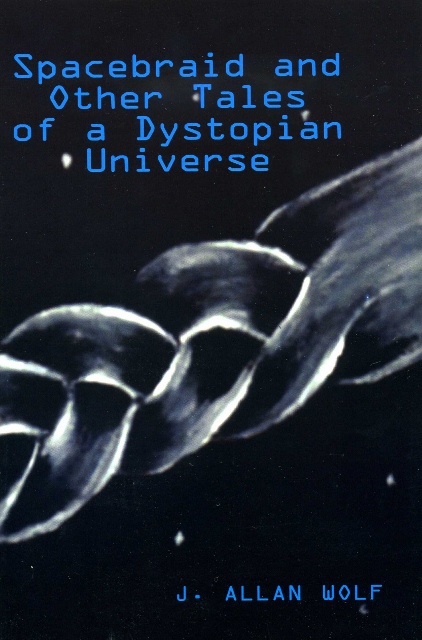
cover_fronte-book front cover reduced (422x640)

Retired and Writing

   (Note: Due to a personal commitment, this week’s blog entry is appearing two days early. Assuming normal inspiration, the next entry will appear at the usual time, i.e., on Friday, 5/2.)

As of today, 23 April 2014, I became officially unemployed. As in retired. Although a well anticipated event, its arrival is going to take some time for mental adjustment. It’s just a bit weird not to be getting up for work, and having no more professional responsibilities after 42 years in medicine since graduating from medical school.

Those who know me well know that I’ve got no shortage of interests and activities to keep me occupied, major among them being writing. With a number of published articles, two books in print, and an essay due to appear in an upcoming issue of a literary journal for medical professionals, I’ve managed to build a body of work that’s taught me much about how to construct pieces for publication.

Writing has been something I’ve loved doing at least as far back as the 7th grade. It began almost as a byproduct of my lusting over a fountain pen. Oh, and not just any fountain pen. No, sir. It was a $1.00, clear barreled Sheaffer fountain pen sold by the student store at Northridge Junior High School. Over a period of years, until I could afford better, I owned several of them as well as similar ones by Wearever. They all leaked, staining my fingers and shirts, but I didn’t care. I was in love with real, flowing ink. I still am, and I treasure the wonderful non-leaking pens I’ve since acquired.

But, I digress.

As soon as I got that first Sheaffer, so did my best buddy, Sam (not his real name), and we started writing little essays of a sort, calling each one an installment of a series called “My Innermost Thoughts”. Sam and I each did this during class time and, somehow, never got caught. I wish I still had those little essays, but the nearest I have to my creative writing from that time is a short paragraph in which I said I thought I’d be a doctor when I grew up. This, actually, was terribly odd, if prescient, since I cannot ever remember wanting to be a doctor until late in my freshman year of college. Until then, I had planned on being an engineer or a physicist, like a first cousin once removed who was with the Applied Physics Laboratories at Johns Hopkins University and was involved in sending up some of our earliest communication satellites.

It was in college that my writing took off. I vomited a great deal of terrible poetry, tried without any recognized success to generate funny stuff for the school’s humor magazine, and (did I mention?), upchucked a lot of really bad, self-indulgent poetry. Every word, incidentally, was written with a fountain pen before getting typed on a blue Royal Futura manual typewriter that skittered across the desk every time I hit the carriage return . By then, though, I had graduated to $5 Parkers that I could fill from a bottle. They leaked a lot less than the Sheaffers.

Writing went largely on hold through medical school, internship, and residency, but once in the private practice of obstetrics and gynecology, I found myself spending long hours in the hospital attending labors and deliveries. Partly to kill time, I began to write again. The first draft of my story, “Spacebraid”, was written mostly in the on call rooms at two hospitals where I spent seemingly endless hours waiting out the often long process of labor. Ultimately, and through several re-writes, “Spacebraid” became the lead story in my first published book, Spacebraid and Other Tales of a Dystopian Universe. It was at that time that the story was almost optioned for film or TV production by a major studio. Unfortunately for me, the studio ultimately decided to take a pass.

I’ve been writing ever since, albeit sometimes in spurts separated by longer periods of inactivity. Zendoscopy was a project that took several years to complete. It’s obviously a much more personal effort than Spacebraid…, with many of its episodes being outlandish riffs on kernels of truth.

Here’s what’s coming on my writing calendar:

  • Saturday, May 3: Book signing for Spacebraid and Other Tales of a Dystopian Universe and Zendoscopy at Mysterious Galaxy in Redondo Beach from 3-5 PM. The store is located at 2810 Artesia Boulevard, about two blocks west of Hawthorne Blvd.
  • Wednesday, June 18: Author appearance at Wanda’s Readers, a book club in Redlands that has chosen Zendoscopy as its June read.
  • Summer 2014: Publication of my essay, “An Obstetric Story”, in The Pharos, the literary journal of Alpha Omega Alpha, the medical honors society.

With some luck, more signings will be scheduled over the next few months. And, of course, the writing continues. Stay tuned.

Today’s Annoyance: Hey! I just retired! Nothing bothers me this week.

H.L. Mencken Had it Right

I just read that 17% of Americans believe that the sun revolves around Earth. Also that 61% don’t believe in the Big Bang, and 52% don’t believe in evolution. These are terrifying statistics. More than indicating a shocking degree of ignorance, it’s a terrible indictment of our educational system and a depressing commentary on the prominence of religious superstition in the country. And it’s going to get worse.

As I write this, there is a movement active on a number of U.S. college campuses to enact rules requiring disclaimers on certain course descriptions warning that some material in them may be offensive or disturbing to students. In other words, in the very institutions that should be challenging and stimulating students with new, controversial, and unfamiliar concepts, there are those who want to warn them that they might want to avoid classes that do just that.

Recently it was revealed that the most banned book in the U.S. in 2012 was author Dav Pilkey’s Captain Underpants. It even outranked Fifty Shades of Grey. Why? Because a certain faction in our country thinks kids shouldn’t learn about hygiene when the vehicle uses the word, “poop”.

Taking all these facts together, I’m forced to repeat the words of William Bendix in the old Life of Riley television show: “What a revoltin’ development this is!” Or, more specifically, to wonder just how ignorant, prudish, and stupid people can be. H.L. Mencken said it best when he commented that nobody ever went broke underestimating the intelligence of the American public.

I sometimes wonder where we’re headed. American students rank 37t h in math proficiency, coming in just behind the Slovak Republic. As a nation, we are woefully ignorant of both world and our own country’s history, of world geography, science, literature, and we lack foreign language proficiency to an extent that’s shocking compared to the rest of the developed world.

Politicians, especially those of right wing persuasion, refuse to acknowledge or address all of these issues in any constructive way, their reasons being religious and economic (their own economics, actually). They’re cynical, ignorant, and willing to let the country transform itself into a third world nation with faith that “the Rapture” will ultimately resolve all problems by saving the worthy. In succinct terms, this makes me sick.

Here’s a question. If all of our technology vanished today – no more cell phones, Twitter and Facebook, cars, planes, refrigerators, i.e., everything – and we all found ourselves at square one lighting candles, would today’s younger generation have the knowledge and ability to re-create the modern world?

Think about it. Do people who are convinced that power lines cause cancer understand that their cell phones are sending out radio waves into their brains? Do people understand that if Earth were to stop spinning, people would not actually fall off into space, as someone once suggested to me? Do people really think that “intercessory” prayer can help people to survive surgery? It is almost beyond belief that such people, people who don’t have the math skills to balance a check book, would be able to re-create the technological world in which we now live and which, by the way, we take for granted.

Ah, but you say we actually do have enough older, established scientists and engineers and even some younger ones who are up to the task. Yes, it’s true, but none of the current crop of ignoramuses in government will fund them. And besides, we have ceded too much of our manufacturing capability to foreign countries. We’d have to rebuild factories and machinery that we don’t know how to build or, more likely, come up with the long green to buy it all from other countries, mainly China. Men of my age remember taking shop courses in junior high and high school, and being able to learn a trade in many occupational training schools. But we’re getting to be old farts, and schools hardly provide that kind of training these days since, as a society, we no longer value it. Instead, everyone is supposed to go to college. Not everyone should and, even among those who show promise, vast numbers of them are so ill-prepared by their prior education that they cannot write a simple, declarative English sentence without spelling and grammatical errors.

Depressing? You bet. I want to believe that all this can be fixed. That people will cast off religious superstition, overly selfish economic motivation, and apathy, that they will demand better education in basic math, language and science, and vote for increased investment in vocational training programs for those who really shouldn’t or don’t want to go to college. But in a country where half or more of the population can’t be troubled to go to the polls to vote, what hope is there for change?

It’s often been said that we get the government we deserve, but that’s the punitive view. I think we deserve better. People just need to get off their butts and demand it. If they don’t, we’ll never get the rascals out.

Today’s Annoyance: People who, like, can’t get a simple sentence out without, like, saying the word, “like”.

What the F#@k Is It with Republicans?

So, what the f#@k is it with Republicans? The “party of Lincoln”? The party that is supposed to revere the country’s Founding Fathers? How is it that this once respectable institution has fallen so far into the black hole of anger, self-interest, and vindictiveness? To wit, these widespread Republican positions, behaviors, and beliefs:

  • Opposition to civil rights legislation.
  • Abandonment of any respect for separation of church and state with brazen and repeated attempts to turn the country into a Christian theocracy.
  • Gutting of the voting rights act and attempting to impede access to the polls by minorities whom they fear will vote for opposition candidates.
  • Puritanical opposition to insurance coverage for contraception while supporting coverage for treatment of erectile dysfunction.
  • Hostility toward Social Security.
  • Cutting of food stamp coverage for those in need.
  • Opposition to equal pay for equal work for women.
  • Opposition to sensible immigration reform, including the Dream Act and paths to citizenship.
  • Support for budgetary cuts in programs designed to aid the poor.
  • Opposition to any increase in the minimum wage and, even, to the minimum wage itself.
  • Opposition to health care reform and support for cuts in Medicare and Medicaid.
  • Rejection of established scientific truth: global climate change, evolution, and almost any hard data in conflict with preconceived notions or religious superstition.
  • Refusal to support environmental protection measures (since, after all, Armageddon and the Rapture will take care of things permanently!).
  • Opposition to any sensible firearms regulation.
  • Opposition to campaign spending limits.
  • Veiled racism, including persistent “birther” nonsense and opposition to anything coming from President Obama regardless of merit.
  • Using anecdotal and single example evidence to promote biased generalizations.

What is wrong with these people? And why do so many of those who stand to be hurt the most by the policies supported by their Republican representatives keep re-electing them?  I wish to hell I knew. All I do know is that many of the Republicans I speak with seem to have this inchoate sense of anger with the world and a degree of self-interest that borders on the solipsistic: “It’s all about me. Go f#@k yourself.”

Republicans seem ignorant of history, either rejecting well established evidence of the Founding Fathers’ thinking or simply twisting it in ways unrecognizable to well educated individuals. Self-interest – often naked greed – seems to be the motivating influence for many Republican office-holders, and the more moderate Republicans, if any remain, are too cowardly to stand up to the nut cases.

Pundits are saying that Republicans may well capture the Senate in the upcoming midterm elections. Once again, ignorance and stupidity may result in people voting against their best interests. One really does have to ask why any minority voter, why anyone receiving Medicare or Medicaid, why anyone dependent upon food stamps, why anyone who uses contraception…would vote Republican. It makes no sense. None at all. But, then, watch Fox’s loony bin of angry white guys and blonde bimbos spewing their ignorant, venomous propaganda. Well, as Republican Abraham Lincoln noted, you can fool some of the people all of the time… But, then, Lincoln freed the slaves. The current bunch of GOP bigots seems to want to resurrect the chains.

Oh, and by the way, there are plenty of unhelpful Democrats around, too, many of them in public office. Why the hell aren’t they more supportive of the President? More willing to stand up for what they say they believe? Why do those guys keep getting elected?

Being a hopeful cynic, I look forward to people waking up and voting the rascals out but, as I listen to NPR and read my daily newspaper, I just don’t think it’s likely to happen in my lifetime.

Today’s Annoyance: I think the foregoing is enough for this week.